
Automated Barcode Scanning Solutions
Modern warehouses, manufacturing facilities, distribution centres, and logistics operations require fast and accurate product identification throughout receiving, production, packing, sorting, and dispatch. As product volumes increase, manual scanning can become time-consuming, inconsistent, and difficult to scale.
Automated Barcode Scanning Solutions enable businesses to capture product information automatically as cartons, packages, components, and pallets move through conveyors, production lines, packing stations, and distribution processes.
With 30+ years of experience in Automatic Identification and Data Capture (AIDC), barcode, RFID, industrial automation, and system integration, Stallion Global designs and implements application-focused scanning systems for businesses across India and the Middle East. Our solutions can combine fixed-mount barcode scanners, imaging technology, machine vision, sensors, conveyor integration, software, and automation controls according to the operational requirements of each project.
What Is an Automated Barcode Scanning System?
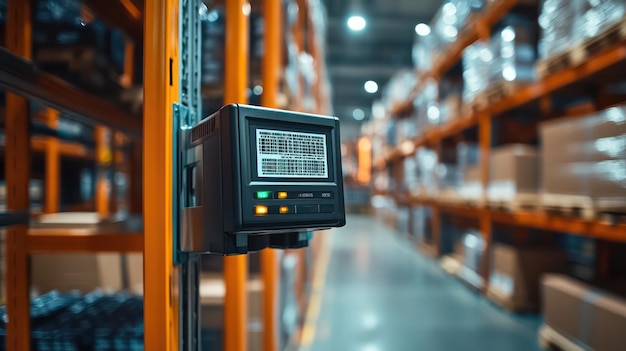
An automated barcode scanning system captures barcode information without requiring an operator to manually scan every item. A fixed industrial barcode scanner, imaging scanner, or vision-based system is positioned at a specific point in the workflow, such as a conveyor, production line, receiving area, packing station, or dispatch zone.
Sensors detect an approaching product and trigger the scanning process. The captured data can then be transferred to the relevant automation or business system for verification, tracking, sorting, routing, inventory visibility, or shipment processing.
This approach is particularly useful for high-volume environments where continuous data capture, operational efficiency, and reduced manual intervention are important.
Get a Custom Barcode Automation Solution Today
Stallion's Barcode Scanning Technologies
Stallion develops Automated Barcode Scanning Solutions for warehouses, manufacturing facilities, logistics operations, distribution centres, production lines, and material-handling environments.
Technology selection is based on the actual application rather than scanner specifications alone. Product dimensions, barcode type, print quality, barcode location, conveyor speed, product orientation, scanning distance, lighting, operating conditions, throughput, and integration requirements are considered during solution design.
Fixed Mount Barcode Scanners
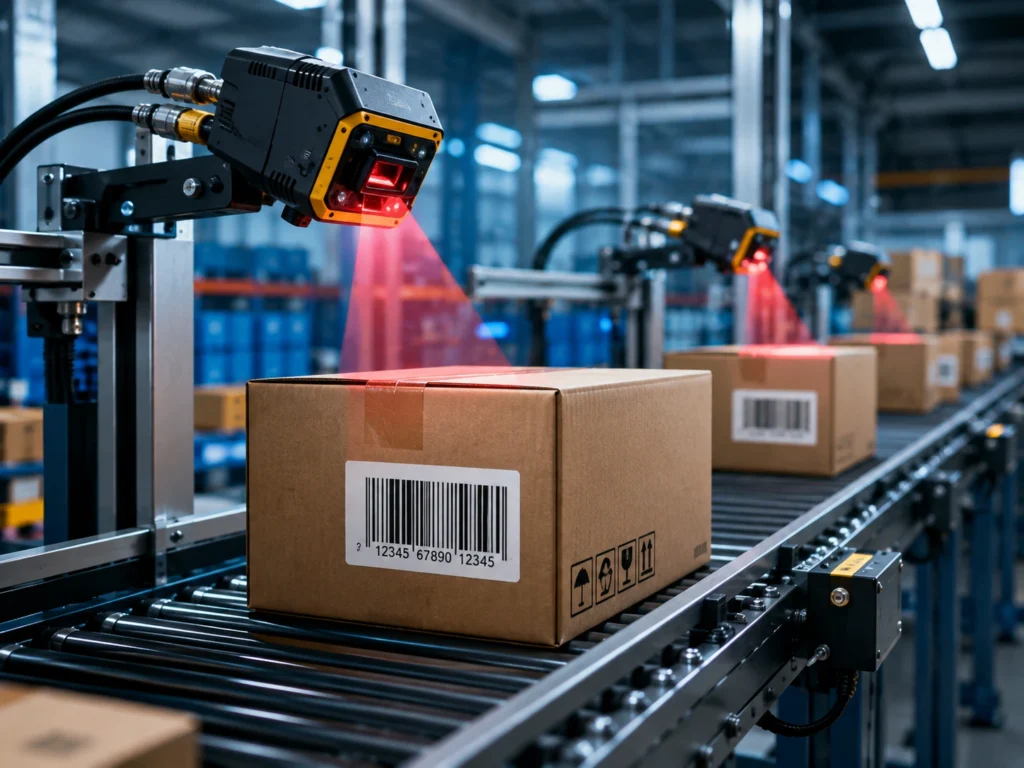
Fixed mount barcode scanners are installed at permanent scanning points on conveyors, production lines, packing stations, and automated material-handling systems. They provide hands-free barcode capture as products, cartons, or packages pass through the scanning zone, making them suitable for continuous identification and high-volume operations.
Laser and Imaging Barcode Scanners
Laser scanners can be suitable for specific fixed-position applications, while imaging-based barcode scanners provide flexibility for reading different barcode types, including appropriate 1D and 2D applications. The right technology depends on barcode symbology, print quality, reading distance, product movement, operating speed, and environmental conditions.
Machine Vision and Camera-Based Scanning
Camera-based scanning and machine vision systems can support applications where products have different orientations, multiple barcode locations, or more complex identification and verification requirements. Depending on the application, vision technology can support barcode reading, product identification, verification, and inspection-related processes.
Conveyor and Multi-Sided Scanning
Conveyor barcode scanning integrates fixed readers with material-handling systems to capture product information as items move through the line. For cartons with barcodes positioned on different sides, multi-sided scanning configurations can be designed using multiple scanners or imaging systems. Scanner placement is determined by product dimensions, barcode location, conveyor configuration, and required read coverage.
Print and Apply Systems
Print-and-apply technology can automate label printing and application during production, packaging, and shipping processes. When integrated with barcode identification, it can create a more connected labelling and product-tracking workflow.
How Automated Barcode Scanning Works
A typical workflow consists of five stages:
- Product Detection
Sensors detect when an item enters the scanning area. - Barcode Capture
A fixed scanner, imaging device, or machine vision system reads the barcode. - Data Processing
Captured information is transferred to the relevant control or software environment. - Verification
The system can compare barcode information against configured product, order, inventory, or process data. - Workflow Action
Depending on the application, the information can trigger sorting, routing, tracking, labelling, packing, inventory updates, or dispatch verification.
This connects barcode identification with the wider operational workflow rather than treating scanning as an isolated activity.
Find the Right Barcode Scanning Solution for Your Needs
Applications Across Warehousing, Logistics and Manufacturing
Automated Barcode Scanning Solutions can support a variety of operational processes, including:
- Receiving and returns
- Conveyor-based product identification
- Carton and package scanning
- Warehouse sorting and routing
- Packing and dispatch verification
- Shipping validation
- Production line tracking
- Product traceability
- Barcode verification
- Automated labelling
- Material handling
- Distribution centre operations
- Component identification
- Work-in-process tracking
- Packaging verification
In warehouses and distribution centres, automated identification can help streamline the movement of high volumes of products while maintaining consistent data capture.
In manufacturing, barcode scanning can support component identification, production tracking, traceability, quality verification, and movement between different stages of production.
Integration With WMS, ERP and Automation Systems
The value of barcode automation increases when captured information becomes part of the wider business process.
Stallion approaches scanning as an integrated solution rather than simply supplying hardware. Depending on the project, systems can be designed around Warehouse Management Systems (WMS), Enterprise Resource Planning (ERP), Manufacturing Execution Systems (MES), PLCs, sensors, conveyor controls, and warehouse automation infrastructure.
Integration requirements differ between businesses. Existing software, automation equipment, workflow logic, data requirements, and downstream actions are considered when developing the solution architecture.
This helps businesses connect automatic identification with inventory, production, warehouse, and logistics processes.
Benefits of Automated Barcode Scanning
Faster Data Capture
Automatic identification enables products to be scanned as they move through defined points in the workflow, supporting high-volume operations.
Reduced Manual Intervention
Repetitive scanning tasks can be automated, allowing employees to focus on activities that require greater operational involvement.
Improved Data Accuracy
Direct barcode capture can help reduce errors associated with manually entering product, inventory, and shipment information.
Better Traceability
Barcode data can support visibility of product movement across production, warehouse, packing, and dispatch processes.
Improved Operational Efficiency
Integrated scanning can streamline material-handling and identification processes across warehouses, factories, and distribution operations.
Scalable Automation
A properly designed architecture can be adapted as product volumes, workflows, and automation requirements change.
Why Choose Stallion Global?
With 30+ years of industry experience, Stallion Global brings established expertise in AIDC, barcode, RFID, industrial automation, warehouse technology, and system integration. Our approach begins with understanding each customer’s operational requirements before selecting the right technology. Depending on the project, our capabilities include application and process assessment, product and barcode analysis, scanner technology selection, solution architecture and system design, conveyor and automation integration, software integration, installation and commissioning, system testing and validation, and ongoing technical support and maintenance.
This combination of technology expertise and system integration experience enables Stallion to develop solutions around the complete operational workflow rather than treating a barcode scanner as a standalone device. For businesses in Kochi, Kerala, across India, and in markets including the UAE, Oman, and Qatar, Stallion provides application-focused consultation and technology solutions backed by more than three decades of industry experience.
Upgrade Your Operations With Automated Scanning
Frequently Asked Questions
What is a fixed mount barcode scanner?
A fixed mount barcode scanner is permanently installed at a specific scanning point and automatically reads barcodes on products, cartons, packages, or other items moving through a production or material-handling process.
Can automated barcode scanning integrate with WMS and ERP?
Yes. Scanning systems can be designed to exchange relevant barcode data with WMS, ERP, MES, and other business or automation systems, depending on the technical requirements of the application.
Can automated barcode scanners read 1D and 2D barcodes?
The supported barcode types depend on the selected scanner or imaging technology. Barcode symbology, print quality, reading distance, product movement, and environmental conditions should be considered when selecting the appropriate device.
Can Stallion customize a barcode scanning system?
Yes. Stallion designs solutions according to product characteristics, barcode placement, conveyor speed, scanning requirements, operating conditions, workflow, and integration needs.
What information is required to design a scanning solution?
Product dimensions, barcode samples, barcode location, conveyor speed, scanning volume, product orientation, operating environment, conveyor layout, existing automation equipment, and software integration requirements are useful inputs during solution assessment.