Direct Part Marking Solutions
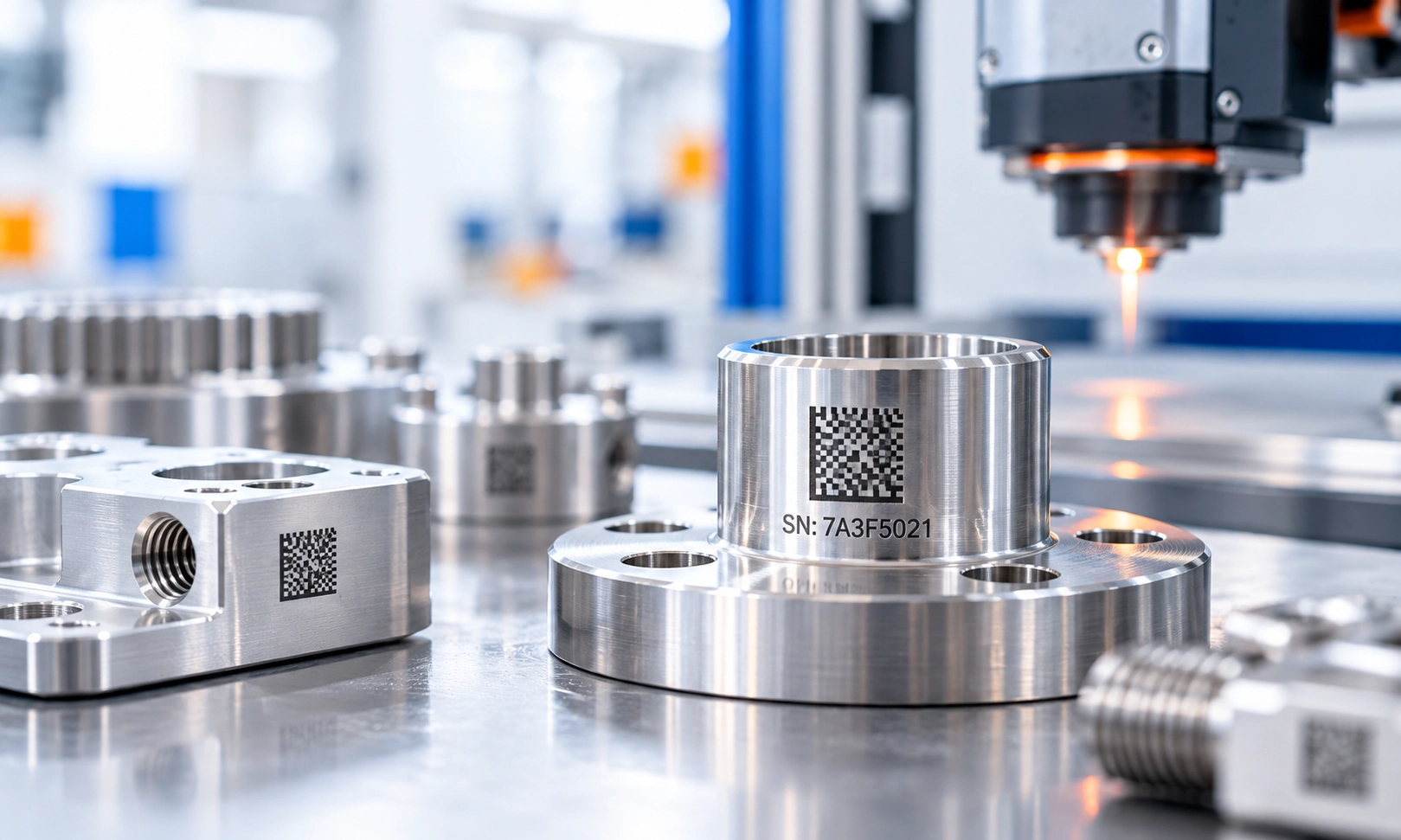
Modern manufacturing requires more than simply identifying a component. Manufacturers need reliable part identification, traceability, serialization, and machine-readable marking that can remain associated with a product throughout its operational lifecycle. Direct Part Marking Solutions enable manufacturers to apply identification information directly onto components and products using technologies such as laser marking and industrial inkjet printing.
Stallion Global provides application-focused identification and AIDC solutions for businesses that need dependable product and component tracking. From automotive and electronics to engineering, medical devices, and industrial manufacturing, our solutions help organizations establish accurate identification at the point of production and support efficient data capture across the supply chain.
What Is Direct Part Marking?
Direct Part Marking (DPM) is the process of permanently or semi-permanently applying identification information directly onto the surface of a component or product rather than using a separate label.
Depending on the application, manufacturers can mark:
- Part numbers and model numbers
- Serial numbers and unique identification codes
- Batch and lot numbers
- 1D and 2D barcodes
- Data Matrix and QR codes
- Manufacturing or inspection information
- Logos and product identification details
The marking method is selected according to the material, surface characteristics, required durability, production speed, code size, and environmental conditions. This makes Direct Part Marking Solutions particularly useful where conventional labels may be unsuitable or where product identification needs to remain available throughout the component’s lifecycle.
Get the Right Direct Part Marking Solution
Why Part Marking Matters in Manufacturing
Accurate part marking creates a reliable connection between a physical component and its digital production record. When combined with barcode scanners, machine vision, verification systems, ERP, or MES platforms, marked components can be tracked through multiple stages of manufacturing and distribution.
Key benefits include:
Reliable Part Identification
Permanent or durable identification helps operators and automated systems distinguish between similar components, models, and production batches.
Improved Traceability
Serialized components can be associated with manufacturing information, inspection records, production stages, and service history. This supports product traceability from production through field operations.
Machine-Readable Data Capture
Data Matrix codes, QR codes, and other machine-readable codes can provide compact identification on components where available marking space is limited.
Reduced Dependence on Labels
For applications exposed to heat, abrasion, chemicals, moisture, or demanding industrial environments, direct marking can offer an alternative to conventional adhesive labels.
Support for Quality and Compliance
Consistent identification makes it easier to verify components, investigate production issues, manage recalls, and maintain accurate manufacturing records.
Laser Marking Solutions for Industrial Applications
Laser marking is a non-contact technology that uses a focused laser beam to create identification marks on a component surface. Depending on the material and required result, the process may involve engraving, etching, or controlled surface modification.
Laser Marking Solutions are commonly considered for applications requiring precise, durable, high-resolution identification. They can be suitable for metals, plastics, coated materials, and other industrial substrates when the correct laser technology and parameters are selected.
Typical applications include:
- Serial number and part number marking
- Data Matrix code marking
- Product and component identification
- Permanent industrial marking
- Automotive component marking
- Electronics identification
- Medical device marking
- Manufacturing traceability
The appropriate laser source, marking speed, contrast, code size, and substrate compatibility should be evaluated before implementation.
Get Expert Guidance for Your Part Marking Requirements
Industrial Inkjet Marking and Coding
Industrial inkjet technology provides another approach to product identification, particularly for production lines where variable information needs to be applied quickly to moving products or components.
Continuous Inkjet (CIJ) systems can be used for high-speed coding applications, while Drop-on-Demand (DOD) technology can support specific variable-data and industrial printing requirements.
Inkjet marking can be used for:
- Batch and lot coding
- Serialisation
- Product identification
- Production date information
- Variable data printing
- Manufacturing codes
- High-speed production-line marking
The choice between laser and inkjet depends on factors such as substrate, required permanence, production environment, marking speed, available space, and operational requirements.
Direct Part Marking for Traceability and Serialization
Traceability becomes increasingly important when products contain multiple components or need to be tracked throughout manufacturing, distribution, installation, and service.
With Direct Part Marking Solutions, a unique serial number or machine-readable code can be assigned to an individual component. The code can then be captured using barcode scanning or machine vision and linked to relevant records within an ERP, MES, inventory, or production management system.
A typical workflow can include:
Component Identification → Unique Code Assignment → Direct Marking → Code Scanning → Verification → Production Record → Traceability
This approach helps manufacturers build a more connected identification process while improving visibility across production and inventory operations.
Industries That Use Part Marking
Part marking and component identification are used across industries where accurate product identification and traceability are essential.
Automotive & Engineering: Mark engine components, mechanical parts, tools, and assemblies with serial numbers, part numbers, or Data Matrix codes.
Electronics: Identify PCBs, electronic components, housings, and assemblies using compact machine-readable codes.
Medical Devices: Support identification and traceability requirements for instruments, devices, and components.
Aerospace: Enable durable identification of components where long-term traceability is critical.
Industrial Manufacturing: Track machinery components, electrical equipment, fabricated parts, and assemblies throughout production.
Integrating Marking with AIDC and Manufacturing Systems
Marking technology delivers greater value when it forms part of a wider AIDC (Automatic Identification and Data Capture) environment.
A marked component can be scanned at different production or warehouse checkpoints, while the captured information is connected to business systems. Integration with ERP and MES platforms can help organizations maintain production records, monitor component movement, and improve inventory and quality visibility.
For automated environments, machine vision and barcode verification can also be incorporated to check code readability, marking quality, and identification accuracy before a component moves to the next production stage.
How to Choose the Right Part Marking Technology
The right marking solution depends on the application rather than simply the marking method. Important considerations include:
- Material and surface type
- Required marking permanence
- Code size and available marking area
- Production speed
- Required contrast and readability
- Environmental exposure
- Marking depth and appearance
- Barcode or Data Matrix requirements
- Integration with ERP or MES
- Verification requirements
- Total cost of ownership
A practical assessment of the production workflow helps determine whether laser marking, inkjet coding, or another identification technology is appropriate.
Discuss Your Manufacturing Marking Needs With Our Experts
Why Choose Stallion Global?
Stallion Global brings extensive experience in AIDC, barcode, RFID, printing, scanning, and industrial identification technologies. With more than three decades of industry experience, our approach focuses on understanding the customer’s application before recommending an identification technology.
We work with established technology manufacturers and provide solutions that can be aligned with manufacturing, warehouse, inventory, logistics, and production workflows. Our experience across India and the Middle East, including markets such as Kochi, Kerala, UAE, Oman, and Qatar, enables us to support businesses with application-oriented identification and traceability requirements.
Rather than treating marking as an isolated printing process, Stallion Global considers the complete workflow—from identification and marking to scanning, verification, data capture, and system integration.
Frequently Asked Questions
What is DPM used for?
DPM is primarily used for part identification, serialization, product traceability, manufacturing tracking, and lifecycle identification where durable or machine-readable marking is required.
What is the difference between laser marking and inkjet marking?
Laser marking uses a focused laser to modify the surface of a material, while inkjet marking deposits ink onto the product surface. The appropriate technology depends on factors such as substrate, permanence, production speed, and application requirements.
Which industries benefit from part marking?
Automotive, electronics, aerospace, medical devices, engineering, industrial manufacturing, electrical equipment, and machinery manufacturing can benefit from industrial part marking.
Can marked components be integrated with ERP or MES systems?
Yes. Marked identification codes can be scanned and connected with ERP, MES, inventory, production, and traceability systems to create a connected identification workflow.